
A roof job at a Raytown, MO school, grocery store or big-box retailer starts with the notice, not the ladder. Tenants, staff and delivery drivers need to know which entrance is closed, where trucks will stage and when the noisy work happens. A 2014 chamber report listed the school district, Walmart and Hy-Vee among the top local employers, and each of those building types runs on a different clock: classes, store hours and receiving windows.
The first move is a day-one site walk with the property manager. We record the roof condition on a drawing, agree the access route and write a phase plan before any scope is priced.
A school roof is worked in the quiet months, with the hoist and staging footprint kept away from bus lanes and pickup areas. A grocery store runs its receiving dock on a tight clock, so roof loading is set for midday, and refrigeration units on the roof are protected during any nearby work. A big-box retail roof can be wide, with many rooftop unit curbs, and the fastest way to organize it is by zone.
Every one of these properties has a door or dock that cannot be blocked at noon. We mark those on the plan first and route trucks around them.
Roof access itself is part of the picture. A hatch that opens above a working classroom or a stockroom needs a protected landing, and a ladder bolted to an exterior wall may cross a loading area. We log who has keys, who must be told before the roof is entered, and which entrance staff should use while the crew is on site. Those details go on the first page of the plan.
Tenant notice is written in plain terms: the dates, the hours of noise, the entrance that will be closed and a phone number for the person in charge on site. Tenants who know what to expect rarely need to call the manager.
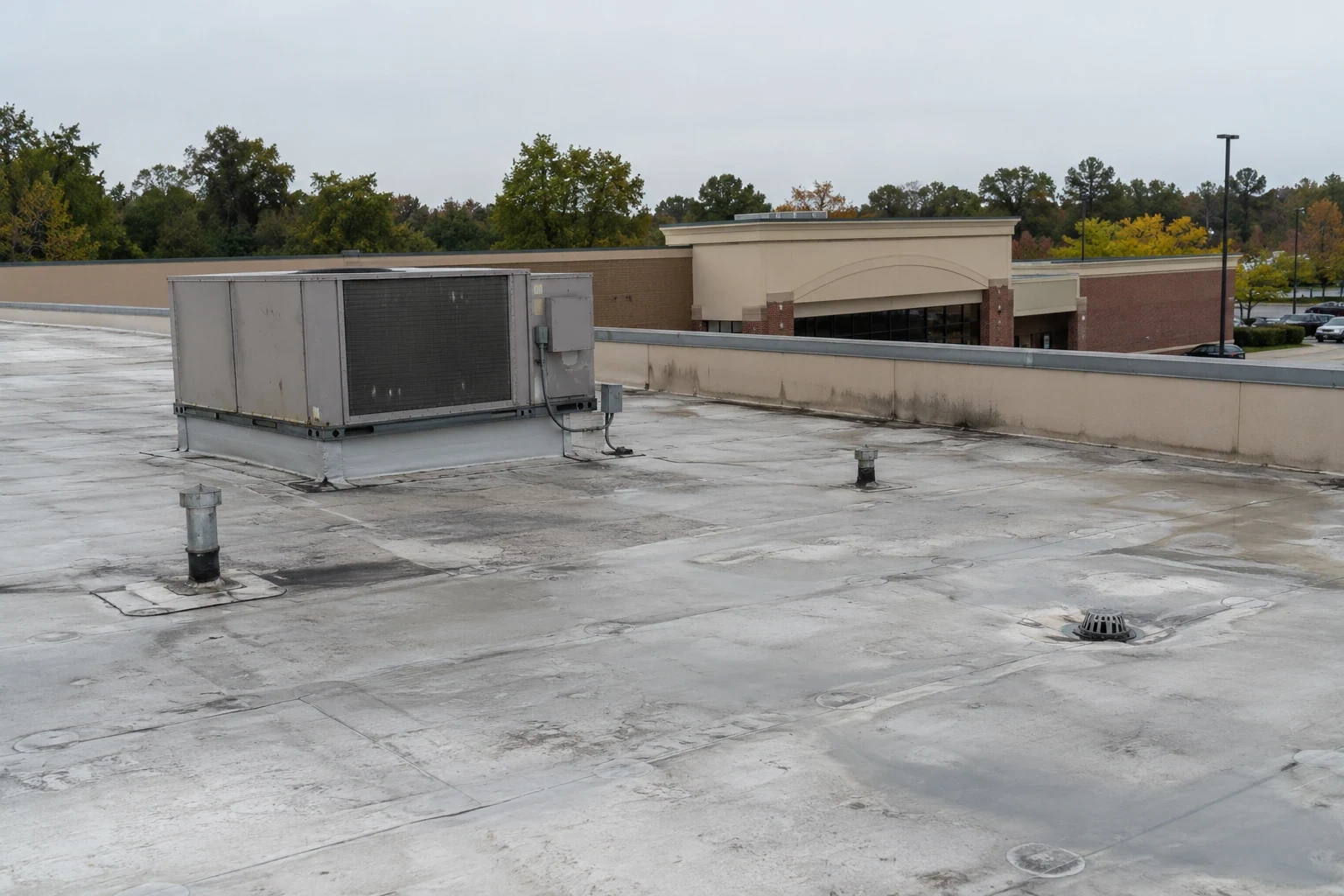
The walk follows a fixed order. We look at drains and scuppers first, because standing water is the quickest way to learn where a roof is failing. Then come the seams and flashing at each rooftop unit curb, the edge metal and the field of the membrane. Photographs go onto the drawing with a location mark, and any soft spot is noted for a moisture check.
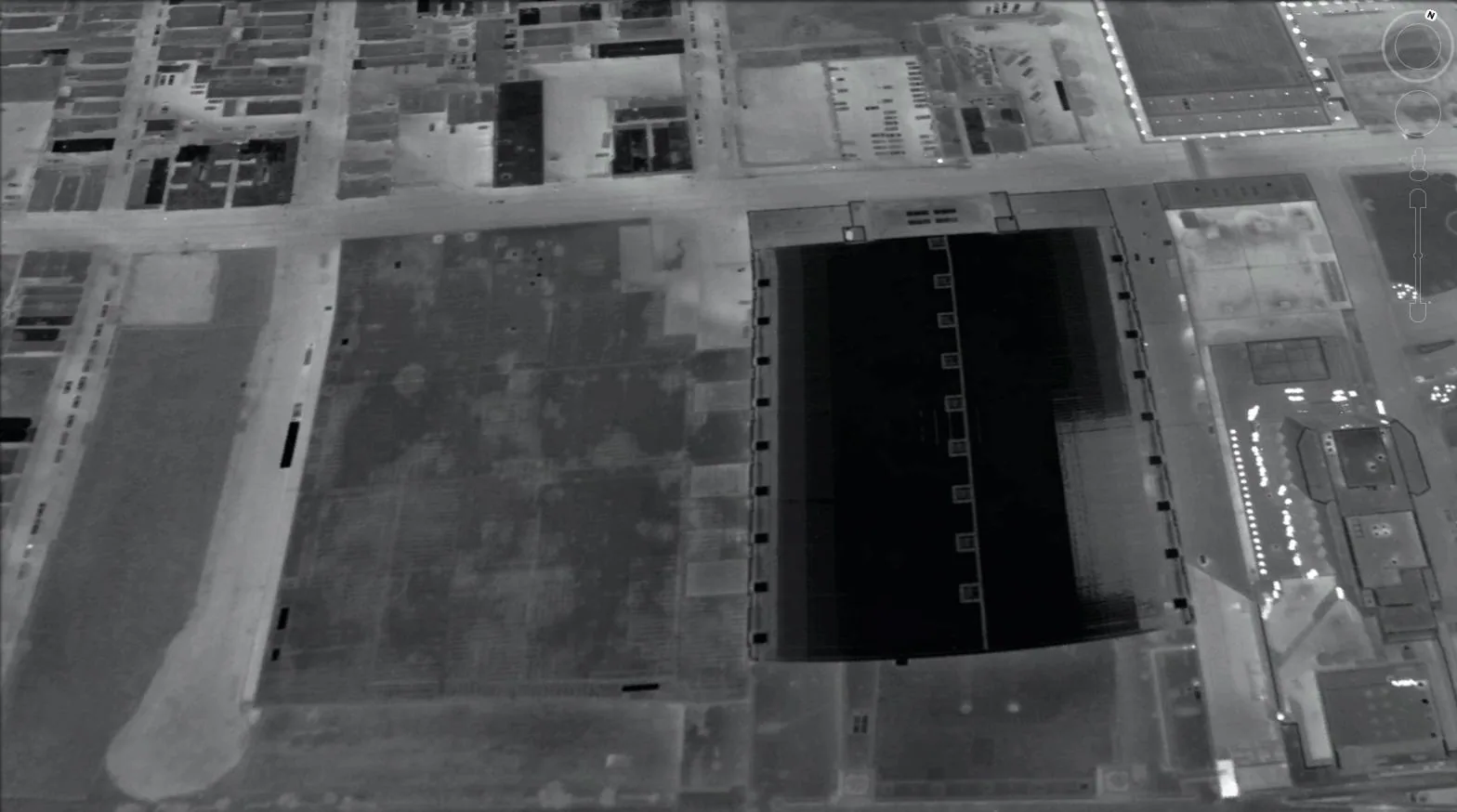
Where a stain inside the store or classroom does not match a defect on the roof, we trace the water along the deck. An infrared moisture survey then shows how far wet insulation reaches, and the repair boundary follows the survey, not the stain.
Fasteners are probed for backing out, seam laps are tested with a probe and any blisters or ridges are marked. Roofs with ballast or pavers are checked for displaced stone near the edges. Rooftop unit curbs are examined for open corners and sealant that has pulled away from the metal. These are the details that control where water goes, and they are recorded one by one so repair cost can be tied to specific items.
The 1957 Ruskin Heights tornado ended east of Raytown after crossing the southern Kansas City suburbs, a reminder that this area has seen violent weather. More recently, the National Weather Service warned in a spring storm line on April 27, 2024 that roofs in Lee's Summit could be damaged, with gusts of 60 mph and penny-size hail.
Both set the priorities. Perimeter metal, coping and edge fasteners are checked before anything else, and spring work carries a weather hold rule written into the plan. If wind damage is found, loose edges are secured first and photographed for the file.
Work moves in phases, and each phase has a boundary marked on the roof drawing. The first day is for the walk, the tenant notice and setting up staging. From the second day, one section at a time comes open and is closed against weather before the crew leaves, with every boundary sealed to the old membrane. Each later section follows the same pattern, so no water can get under the old membrane overnight.
For a full occupied-building reroofing, the plan lists tenant notices, dock hours, noise windows and the walk-off sequence in which crews leave the site. A property manager can follow it like a calendar.
Material delivery is its own step. Pallets arrive at a time agreed with the manager, the truck uses the access route marked on the plan, and the hoist lifts only what the crew will install that day. Debris leaves the roof by chute or enclosed hoist, never by throwing, and the ground below the chute is cordoned off.
The hoist and staging footprint is set where trucks can reach it without crossing customer parking or fire lanes. Material is stacked on the roof only where the deck can carry it, and loose items are tied down at the end of each day. The dry-in point is the moment a section is sealed against rain, and we set it before the section is opened.
A forecast that turns brings a weather hold: the crew finishes the closure it is in the middle of, sheets the open area and reports to the manager. The plan names who gives that order.
At turnover the manager receives a package: what was opened, what was closed, photographs of each phase and a punch list of any items left for a return visit. The roof condition report describes the roof as handed back, and a closing line names the first checks for the next visit, which are the drains after a heavy rain and the sealant at each new curb. Warranty paperwork, if any applies, goes in the same folder.
Owners who also hold buildings in Independence or Hickman Mills can use the same package format for every roof.
A short walk with the manager closes the job. We check the punch list together, confirm that drains are clear and that temporary protection is removed, and hand over the photographs.
Anything noisy, anything that needs the hoist near pickup lanes and any tear-off above occupied rooms. Summer break suits the largest jobs; small repairs can follow dismissal, with fencing around the work and a detour for the entrance.
Receiving hours set the loading window, and refrigeration equipment on the roof is protected or shut down only when the manager agrees. Work is phased so that no section above the sales floor stays open overnight.
The plan sets a rule that halts work when a storm is forecast: seal the open section, tie down material, leave the roof and tell the manager it is closed before any rain. Everyone on site knows the order.
Lee's Summit, nearby, averages about 38 inches of precipitation a year with a wide temperature range, and Raytown shares the same broad climate. The roof itself is read on site, and conditions are recorded on the walk.
Bring the street address, the hours tenants keep, a roof drawing if there is one and a list of leaks reported so far. From those we draft a written sequence plan for the manager to review ahead of pricing.
Send the building address list, tenant hours and any open leak reports. We will walk the roof with the property manager and offer a written sequence plan before any scope is priced.
Request a Roof Assessment