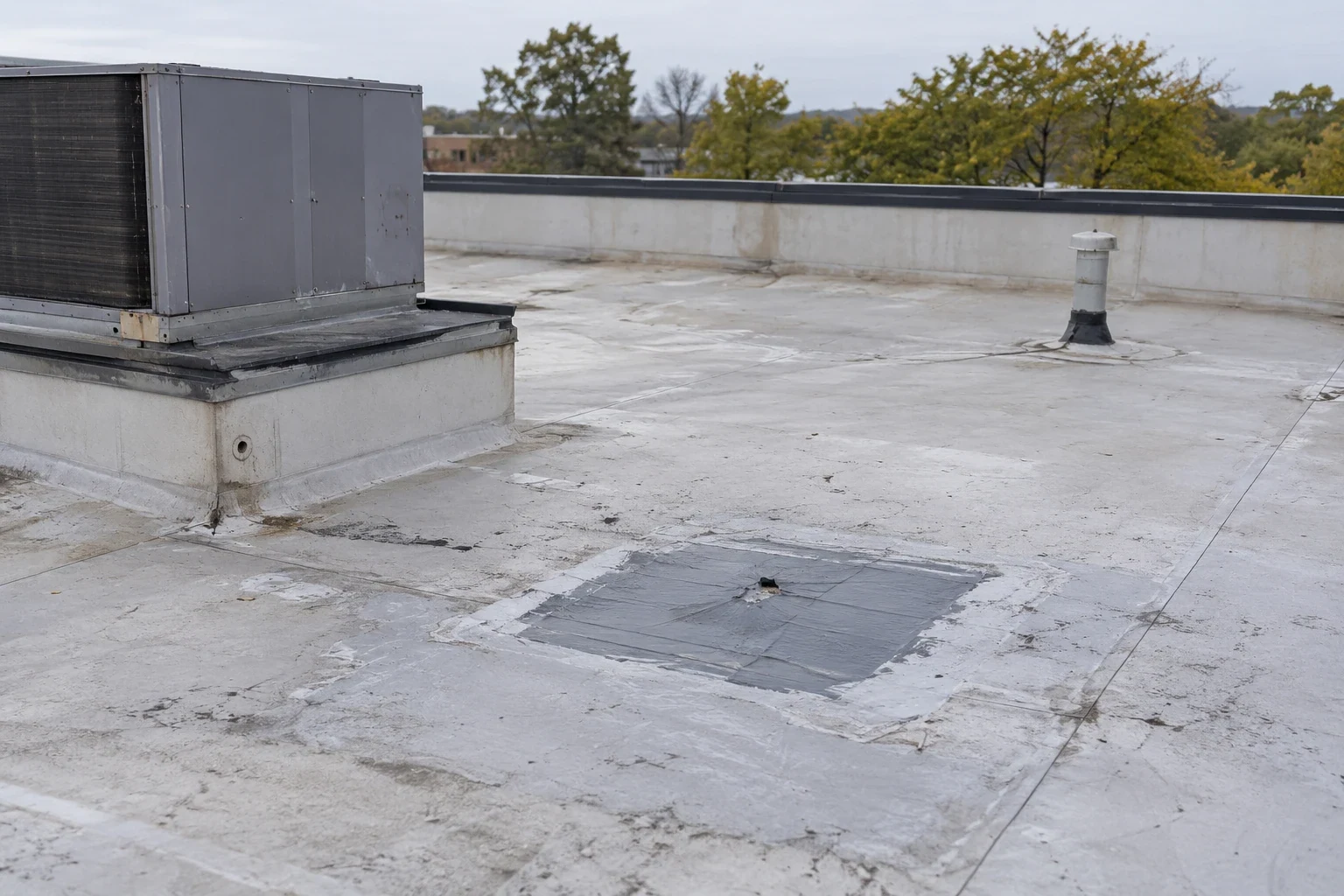

Production schedules, not roof drawings, set the first date on a plant reroof. A line that cannot stop, a furnace or press that vents through the roof, a receiving door that opens at six in the morning: each one fixes a boundary before the membrane is even discussed. Manufacturing is one of the top industries named for Lee's Summit, MO, and the plants and light-industrial buildings along I-470, US 50 and MO 291 share a roof problem that begins with what sits on the deck.
That problem is penetrations. A plant roof is full of stacks, fans, make-up air units and pipe chases, and each one is a place where the roof can fail while production goes on beneath it.
The first conversation is with the plant manager and the safety lead. We ask which areas are sensitive to dust, water or noise, which lines run on which shifts and where a roof opening is allowed to sit overnight. Some plants have a clean zone or a coating booth directly under a roof section, and those areas are treated as exclusion zones until the roof above them is closed.
Tenant notice becomes a work-area notice for the plant: it names the access route, the roof hatch or lift position, the staging footprint and the contact for stopping work. The walk-off sequence at the end of each day is the same on every plant job. Tools out, debris out, openings closed, lanes clear, and a quick look from the floor for any sign of water.
Hoist and staging footprint get extra care on a plant. Material needs a flat, load-bearing spot away from the receiving doors and away from the fire lane. Where the only open ground sits beside the shipping dock, the plan lifts material in small batches at agreed times, so the dock never loses a bay to a pallet of insulation.
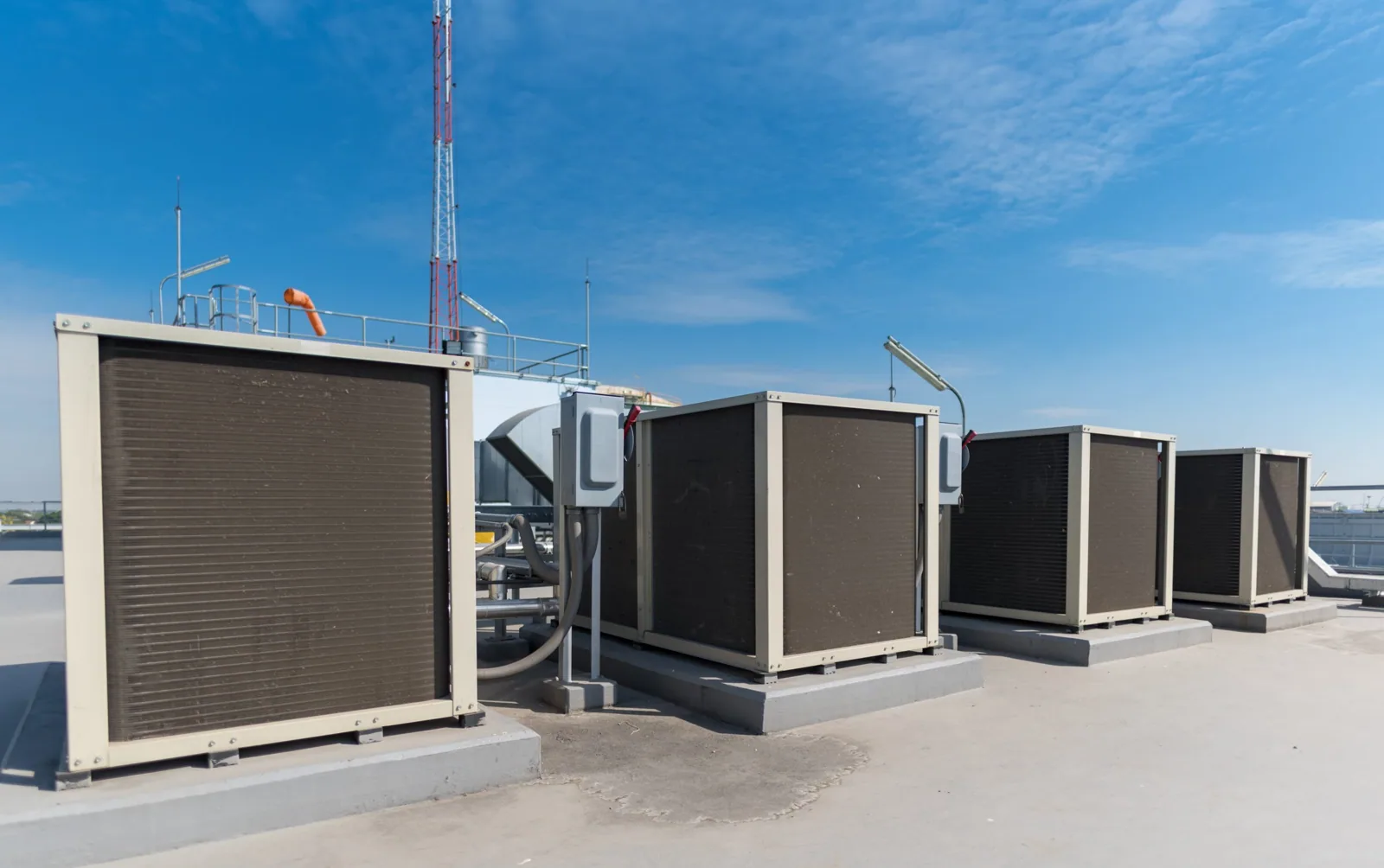
Process exhaust changes what a membrane can tolerate. Hot air from a stack, condensate from a fan or oil mist from a ventilator can soften or swell some materials, and different membranes respond differently. A light-colored thermoplastic such as PVC is often chosen where grease, oil or chemical vapor reaches the roof, because its welded seams and resistance to those exposures suit the job.
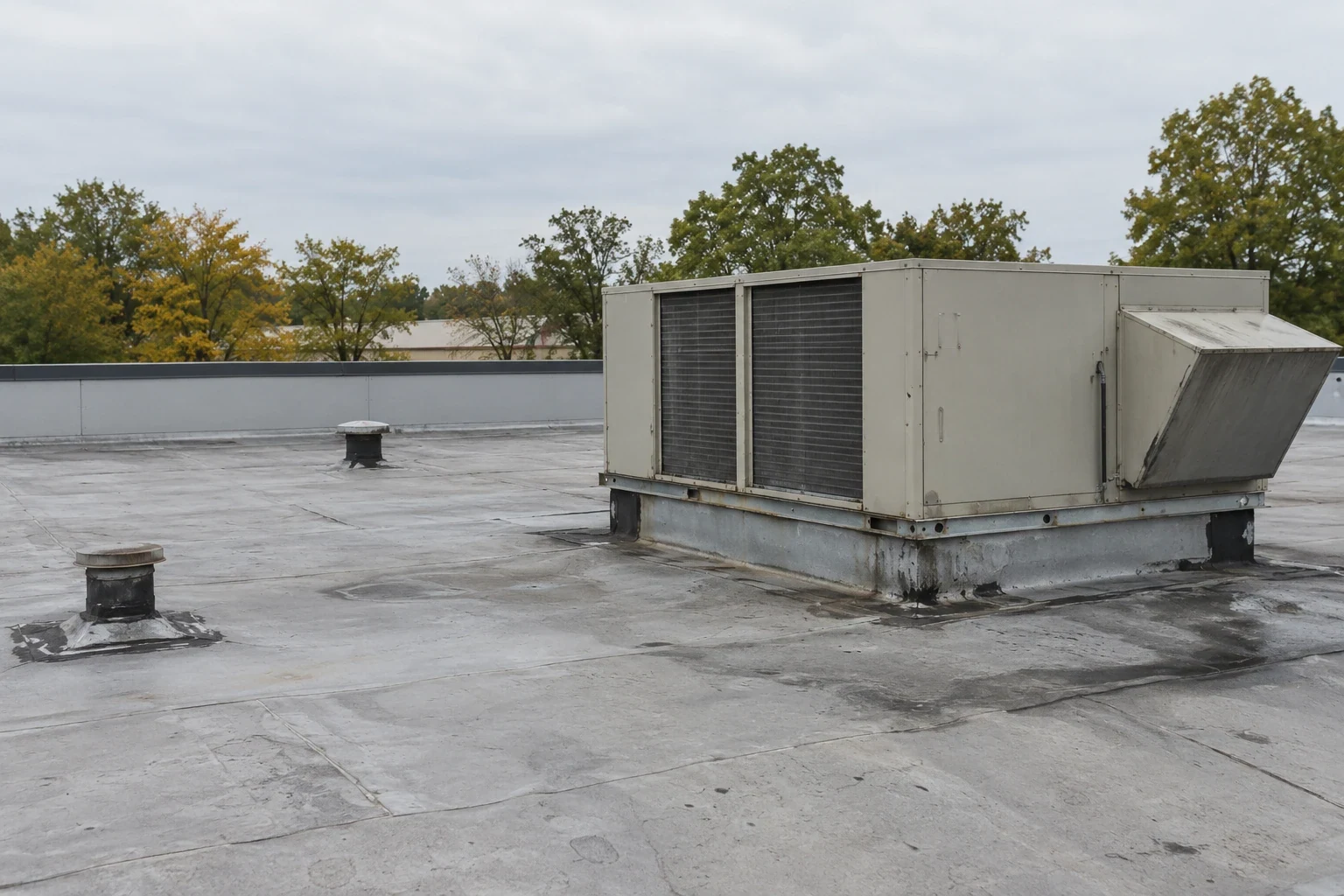
We map the exhaust points before choosing anything. A stack that vents upward and away leaves the field alone. A fan that discharges across the roof surface leaves a stain trail that shows where the membrane is aging fastest. That trail is where we look first, and it is usually where a repair or a heavier walk pad belongs.
Foot traffic matters too. A maintenance crew that walks to the same fan every week wears a path through the membrane, and a path without a walk pad becomes a puncture. Walk pads in the traffic lanes, set in the original layout of the roof drawing, protect the sheet before the wear turns into a repair.
A plant that has been modified over time has penetrations the original drawing never showed. Abandoned pipes, capped stacks and old curbs often remain on a roof long after the equipment has gone. Each is a flashing detail that has aged on its own schedule.
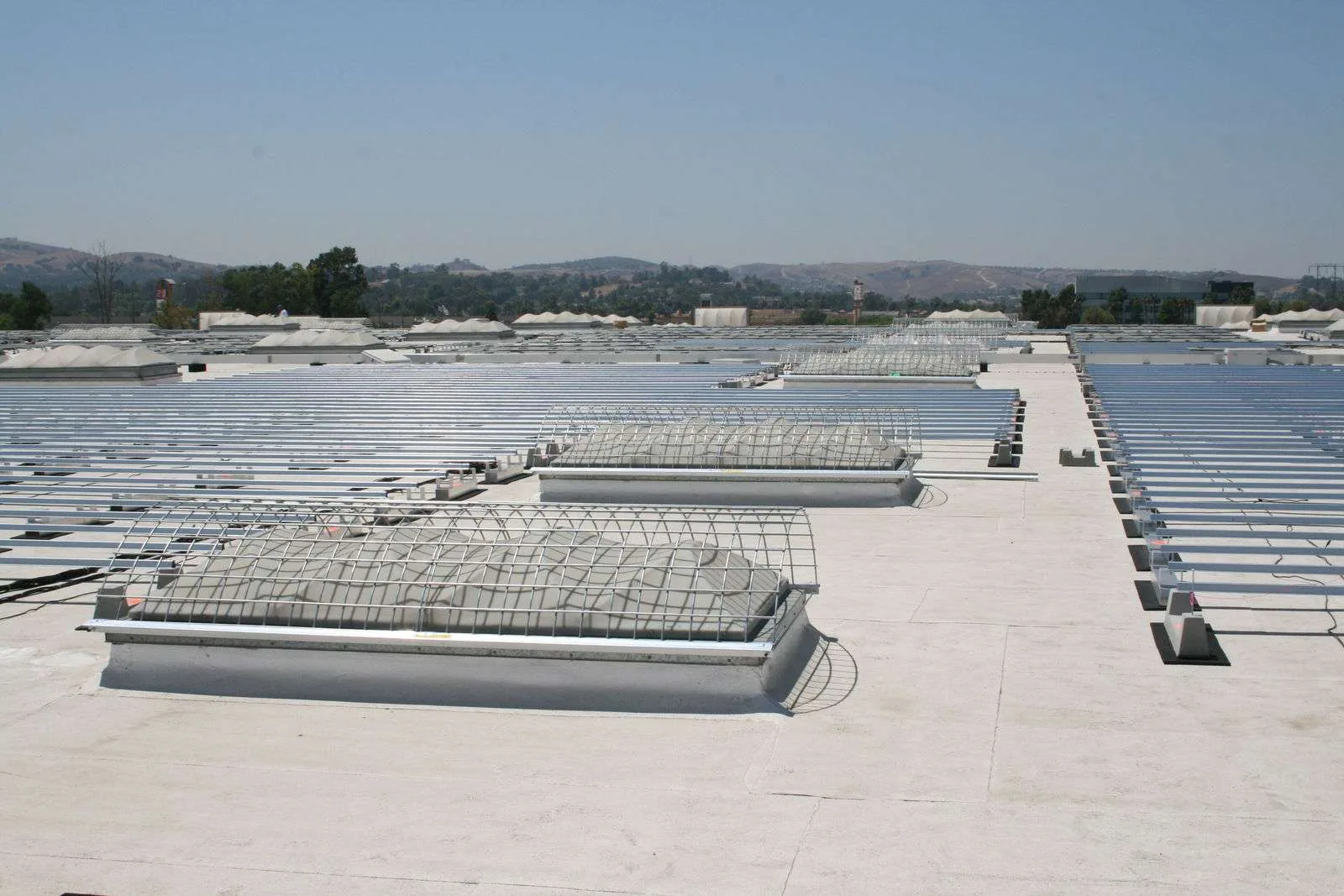
Our survey counts and photographs every one, and we mark which can be removed and which are live. Proper penetration and skylight flashing is rebuilt with the membrane around it, not patched with a bead of sealant. A curb or equipment support that has shifted gets reframed so the flashing can lie flat. When a service technician damages the sheet near a unit, a membrane puncture repair is set into the walk plan, since repeat visits make punctures likely.
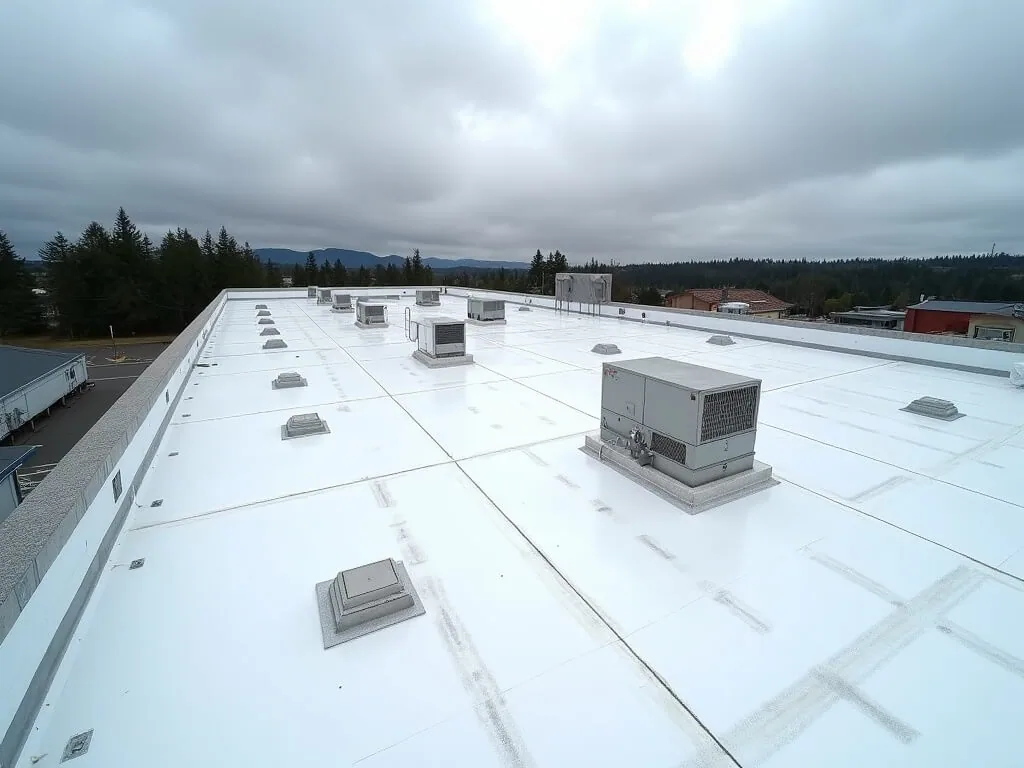
Where a plant also has a front office wing, the roof splits into two jobs, much like a flex industrial roof. A big receiving and storage hall behaves like a warehouse roof, with longer seams and fewer penetrations, and the plan treats each part on its own terms.
Plant employers in the region make very different things. Grandview's financial report lists Peterson Manufacturing, Mead Westvaco Calmar and Ruskin Company among its employers, and Blue Springs lists Faurecia Interiors Systems and Fike Corporation. The Lake City Army Ammunition Plant in northeastern Independence covers 3,935 acres and has 375 buildings, 80 magazines and 25 warehouses.
The range of plants means no two roofs vent the same way, so the first step is a walk, not an assumption. A plant in Grandview or Blue Springs gets the same first step as a plant in Lee's Summit: a walk, a sketch of the roof and a list of what was found.
A thunderstorm warning for Lee's Summit on April 27, 2024 carried 60 mph gusts and penny-size hail and told residents to expect roof damage. A plant roof carries storm exposure from the sky and process exposure from its own vents at the same time. The area also has a July mean high of 88.3F and a January mean high of 39F, with a record low of minus 25F.
That range is hardest on seams and flashings near exhaust equipment. We time reroof work for settled weather and write a weather hold rule into the plan for spring. After any storm, a storm damage inspection starts at the vents and edges.
A plant turnover package lists each penetration by number, its condition at handback and the next inspection date. Photos link to the roof drawing. The plant manager keeps one copy, and the maintenance lead keeps the walk schedule.
Many plants fold this record into a preventive roof maintenance plan with two visits a year. The visits cover drains, exhaust discharge areas and any area the plant has modified since the last walk, so the roof keeps pace with the building rather than the original drawing.
The exclusion zones decide it. If the sensitive areas are mapped and the roof above them is the last section opened or the first closed, production can usually continue. We settle those zones with the plant manager before pricing.
Heat, vapor and residue concentrate where the fan discharges. The surface ages along that plume. We mark it on the survey and consider a protective pad, a different membrane near the fan or a coating.
Most can, once someone confirms the line is dead. We ask for a sign-off from the plant, cut the pipe back, cap it and flash the area with the surrounding membrane. Leaving an unused penetration is rarely cheaper over time.
Permits, fire watch and extinguisher placement are set with the safety lead beforehand. Where a plant stores solvents or powders, we may choose a system that installs without an open flame.
A list of rooftop equipment added or removed, shift and production hours, open leak reports and the building addresses. With that list the first visit can settle where material stages and where each section closes.
Send production hours, building addresses and open leak reports. A walk with the plant manager comes first, and the written sequence follows before pricing.
Request a Roof Assessment