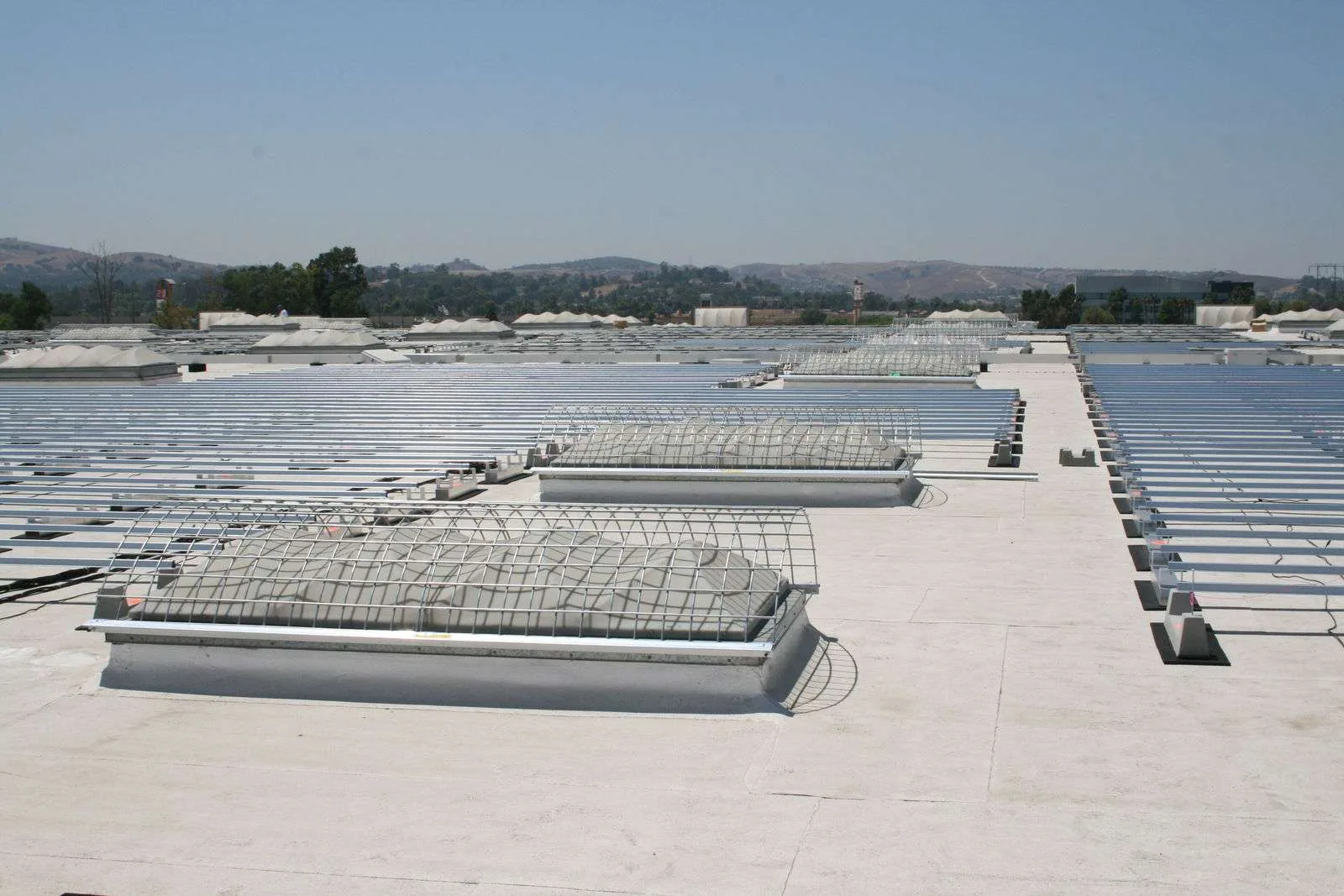
Before a roofer reaches the roof on a military installation, there is a gate, a badge, a vehicle inspection and an escort. That sequence runs longer than any tenant notice, and it sets the working day. For a property manager or contracting officer near Lee's Summit, MO, the installation in the area is the Lake City Army Ammunition Plant in northeastern Independence. The Army owns the 3,935-acre plant and Winchester Ammunition operates it under contract. Roof work on a site like it starts with access and ends with a turnover package the installation can file. The owner may be a federal tenant, one of the public agencies that manage property, or a contractor operating under an agreement, and each of those shapes who signs the submittals.
Installation access follows the rules of the installation, and the rules differ from one gate to the next. In general, every worker needs approved identification and a background check, vehicles are searched on entry, and tools and materials are inventoried at the gate. An escort may be assigned to walk the crew to the work area and stay with them until they leave.
Those steps change how the day is planned. A delivery truck that would reach a commercial site in minutes may wait at the gate for an hour. A crew that needs one more tool must either carry it in or wait for another inspection. We build the schedule around those realities, with staged material loads, a fixed set of crew members, and a full tool list approved before the first day.
Federal roof work is specified to the Unified Facilities Criteria for roofing, and the criteria are detailed. They address membrane selection, insulation, slope, drainage, wind uplift, fire ratings, flashing and the inspections performed during installation. A government specification governs on a government building, and a bidder who reads it as a suggestion will not pass inspection.
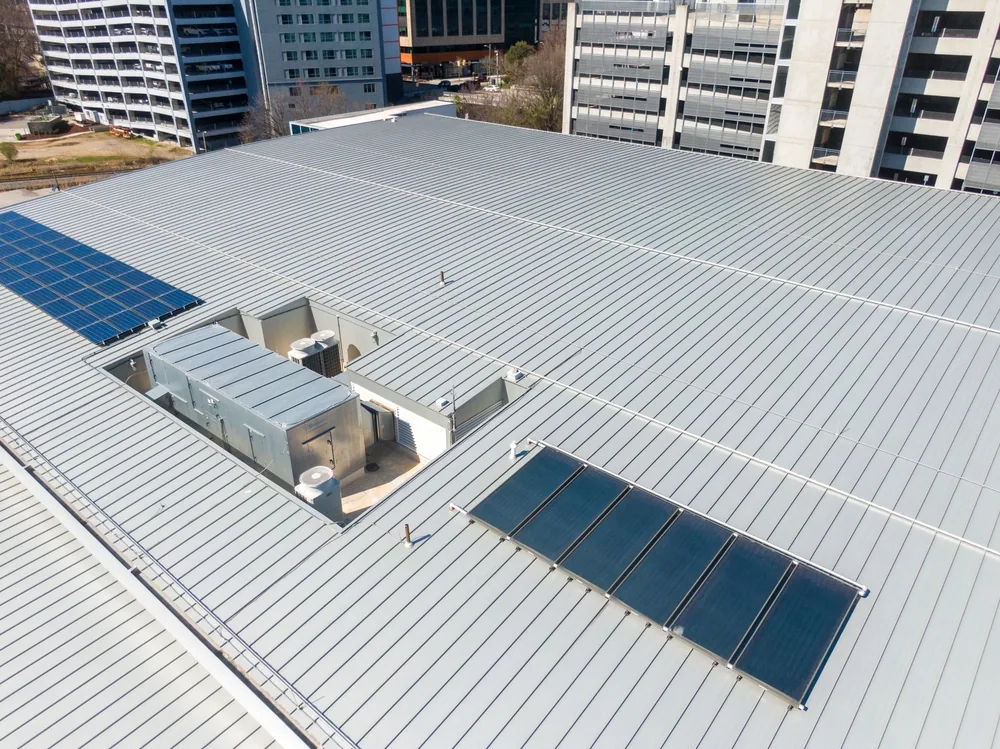
We read the criteria alongside the project specification and mark every place where the two interact: the required attachment, the cover board, the testing, the submittals and the warranty terms. Common types such as standing seam metal and single-ply membranes appear in military buildings, and each carries its own installation requirements. Submittals go in early, since an approval cycle can run longer than the installation itself. When a building needs a complete roof replacement, the specification also governs the tear-off, the disposal route and the testing of the finished roof.
An ammunition plant is not an office park. The Lake City plant has 375 buildings, including 80 magazines, 25 warehouses and 14 igloos, and its work is small arms ammunition under the Joint Munitions Command. Warehouses and production buildings raise their own roofing questions: spark control, hot work rules, penetrations near sensitive spaces and the method of attaching new roofing over existing systems.
Hot work is the issue that changes method most. Open flame, torch-applied membranes and hot asphalt are often restricted or prohibited on such sites, and cold-applied or mechanically attached systems take their place. The roof type chosen for a given building follows from the safety rules for that building. For an Army installation roofing project, that review comes first, before any product is discussed.
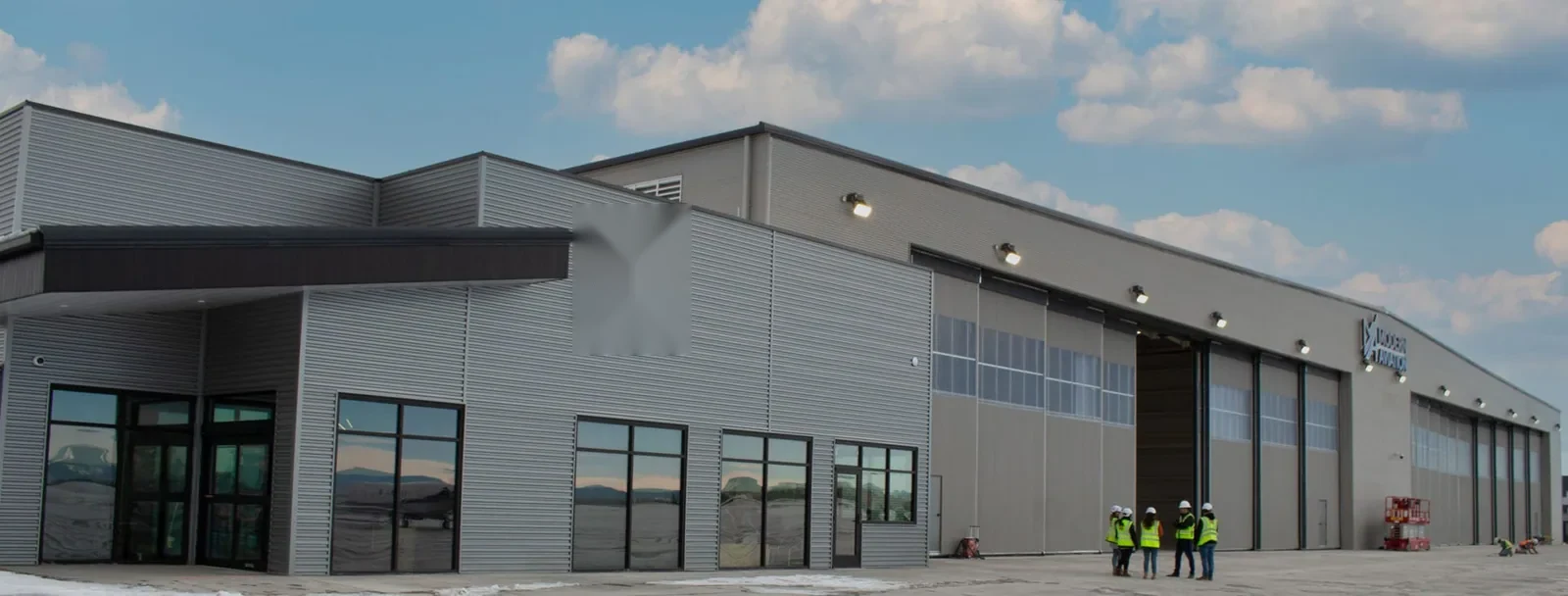
The other military site in the area is no longer active. Richards-Gebaur Air Reserve Station near Grandview closed in 1999, and the land now serves as the CPKC Rail International Freight Gateway. Remaining structures include the SAGE block-house, the control tower and some hangars, while most other former military buildings have been demolished or are deteriorating.
A site like that raises a different roofing question: which of the surviving buildings is worth keeping dry. A hangar that is retained for storage can be roofed like any other aircraft hangar, with long spans, large doors and exposure to wind. A deteriorating structure needs an engineer before anyone climbs on it. Today the site is the Port KC Richards-Gebaur business park, and that is where any roofing on the surviving structures would take place.
On an active installation the mission comes first. Production lines, range schedules and security drills can shut a work area on short notice, and the crew leaves when told. Roof phases are sized small so a closure never leaves a large area open. The same rule governs weather: Lee's Summit sees about 38 inches of precipitation a year, and the National Weather Service warning of April 27, 2024 spoke of 60 mph gusts, penny-size hail and roof damage across the area. A crew pulled off the roof by a gate closure needs the roof already dried in.
That is why the dry-in point is set before the first tear-off and why material is staged at the edge of the work area, not left in the open. A weather hold and a mission hold are written into the plan together. Winter adds its own limit, since a January mean high of 39F and a record low of -25F leave few hours when adhesives cure and welds stay clean, so cold-weather work is held for repairs and prep while the full installation waits for spring.
Federal projects require records that other projects do not: daily reports, test results, material certifications, photographs and inspection sign-offs. We keep the daily log as the work proceeds, and the turnover package includes the as-built roof drawing, the layers installed and the condition documentation the installation's facilities office files. A military roof also benefits from preventive maintenance between major projects, because access delays make a small leak expensive to chase. A maintenance visit on an installation is scheduled like a project, with a badge list and an escort, so the inspection dates are set at the start of the year and the findings are logged against each building. Owners planning several buildings can fold the work into a multi-site roof program with one set of submittals per building type.
Plan for weeks, not days. Badging, background checks and vehicle approvals run on the installation's schedule. We submit the crew list early, hold the same crew through the job and keep a tool and material list ready for each gate inspection.
Only if the specification and the criteria allow it. Federal projects name approved systems, thicknesses, fire ratings and wind uplift values. We start from the specification and check the membrane against it, then confirm the submittal route before ordering.
The crew stops and leaves. Because phases are small and the dry-in point is set before work starts, an area closed at short notice is already watertight. Return times are agreed with the escort and logged in the daily report.
Open flame near munitions or fuel is a fire risk, so many sites prohibit it or require a hot work permit. Cold-applied adhesives, mechanically attached membranes and standing seam metal are common replacements where the rules apply.
A hangar or other remaining structure that stays in use needs a weathertight roof. Others are deteriorating and need an engineer's view first. The question is which buildings stay in service, and the roof plan follows that answer.
Send the roof specification, the installation's access requirements and the mission calendar. We will review them with the property manager or contracting office and return a written sequence plan before any scope is priced.
Request a Roof Assessment